
Solar panels
By installing solar panels you can generate renewable electricity
Contents
Solar electricity panels, also known as photovoltaics (PV), capture the sun’s energy and convert it into electricity that you can use in your home, or send back to the electricity grid in return for a payment known as the Smart Export Guarantee (SEG). Once you have the technology installed, the electricity generated by the sun is completely free and 100% renewable, reducing your carbon footprint and energy bills.
The Centre for Sustainable Energy has a detailed guide that has information about the cost of solar panel installation and how you can find an MCS-accredited installer. MCS is the acronym for the Microgeneration Certification Scheme and is an important accreditation for electricity-generating technologies such as solar PV.
The diagram below shows the journey of electricity generated and how it can be used in your home (with any excess flowing onto the utility grid).
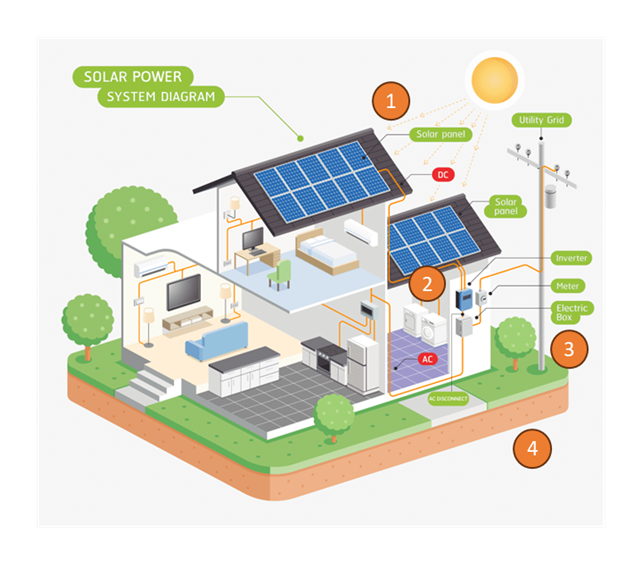
- Solar is captured by the solar panels and the photovoltaic cells convert the sunlight into a direct electrical current (DC). This current then travels to the invertor.
- The invertor converts the DC into an alternating current (AC) which is electricity that can be used straight away in your home to power lights, sockets etc.
- If your energy consumption is more than the solar generated electricity produced, it can draw energy from the national grid in the same way as when there was no solar PV.
- Depending on whether you have a battery, you can store any unused energy for use later, for example to power your home during the night. Alternatively, you can speak with your energy providers about tariffs to sell any surplus energy you don’t use back to the grid. This means all the renewable energy you generate and don’t use can be distributed to other homes for use.
Solar panels generate clean, renewable electricity. They don’t require full sunlight, just light, so even on a cloudy day, good generation can be achieved. There is no burning of fossil fuels, so there are no polluting gases being released into the atmosphere. By installing solar panels, you will reduce your households carbon footprint and contribute to a greener world. If you are in a position to switch to a 100% renewable energy tariff, so when your home needs to use energy from the grid it is drawing clean energy, this will further reduce your households carbon footprint.
There are grants and projects ongoing across the county to help residents make significant energy-efficiency improvements to their properties. This includes grants to fully-fund such improvements for those in fuel poverty or on low incomes. If you would like more information regarding these projects and grants, contact us or register your interest via our online form.
Plug-in solar panels
Generate your own electricity without installing a full rooftop solar system.
Disclaimer: Plug-in solar is a newly emerging technology in the UK. This means that rules and regulations relating to plug-in solar products may continue to evolve. Always check the latest guidance from the product manufacturer, your electricity network operator, and your local planning authority before purchasing or installing a system.
As of August 2026, households in the UK can buy approved plug-in solar panels for their home.
Plug-in solar panels can be particularly useful for those who cannot install a traditional rooftop solar system. This may include people who rent their home, live in a flat with a balcony, or are planning to move in the near future, as many plug-in solar systems can be removed and taken to another property.
How do they work?
A plug-in solar system usually includes one or two solar panels and a small inverter. The panels generate electricity from sunlight, and the inverter converts it into electricity to be used in your home.
The plug-in panels are sold as a kit which plugs into a standard mains socket. This means that the electricity generated feeds directly into your home’s existing wiring circuit. Any appliance that is plugged into the mains, will first benefit from the electricity generated by the plug-in solar panels. This will reduce your reliance on the national grid and may reduce your energy bills.
However, plug-in solar systems are generally much smaller than traditional rooftop solar installations, the potential savings will be lower.
The plug-in panels will only generate electricity during daylight hours and will be more effective if they’re unshaded and south-facing.
Unlike rooftop solar, you won’t be able to sell excess electricity back to the grid. To get the greatest benefit, try to use electricity when the panels are generating power, for example by running appliances such as washing machines or dishwashers during the day.
Important considerations
Plug-in solar kits are becoming available through a range of retailers. Before purchasing a system, make sure it is approved for use in the UK and complies with the latest safety requirements.
You should also:
- Consider having your electrics checked by a qualified electrician before installing a plug-in solar system, particularly if your property has older wiring. If you rent your property, ask your landlord to carry this out.
- Think carefully about whether you can install the panels safely yourself. Plug-in solar panels can be large, heavy and awkward to manoeuvre, particularly on balconies or at height.
- Follow the manufacturer's installation instructions carefully.
- Check that the cable supplied with the system is long enough to reach the socket safely. They should not be used with extension leads.
- Ensure the panels are securely fixed and cannot fall or become detached in high winds.
- Keep cables tidy and protected from damage.
- Avoid installing equipment where it could create a trip hazard.
- Check that outdoor electrical connections are weatherproof.
If you have any concerns about your home's electrical system, seek advice from a qualified electrician.
Registering your system
Plug-in solar systems must be registered with your local Distribution Network Operator (DNO) within 28 days of installation.
Manufacturers and retailers should provide guidance on the registration process. You can also find information through the Plug-in Solar Registration website.
Do I need permission?
Planning permission
In many cases, planning permission may not be required.
But, if you live in a listed building, a conservation area, or the work will change the external appearance of your home, planning permission may be required.
Before carrying out any work, you should seek advice from your Local Planning Authority. If you’re unsure who your Local Planning Authority is, you can find this information through the Planning Portal.
Renting your home
You should obtain permission from your landlord, housing association or managing agent before installing plug-in solar panels.
Leasehold properties
If you own a leasehold flat or apartment, you may need permission from the freeholder or management company before attaching panels to balconies, exterior walls or communal areas.
Check your building insurance
It may also be worth checking whether your home insurance provider needs to be informed, particularly if panels are being attached to the outside of the property.
Is plug-in solar right for me?
Plug-in solar panels can offer a relatively low-cost way to generate some of your own renewable electricity, especially if a rooftop solar installation is not practical.
However, for homeowners with a suitable roof, a conventional solar PV system will usually generate significantly more electricity and provide greater long-term savings.